Urban cool islands: a sustainable response to global warming

Our catalog

According to the Baromètre métropolitain des fortes chaudes, 66% of city dwellers are concerned about the heatwave phenomenon and its repercussions on their living conditions. The phenomenon of urban heat islands leads to temperature differences of up to 10°C between the city and surrounding rural areas. Faced with this phenomenon, which is becoming more widespread every year, thedevelopment of cool islands in the city is becoming increasingly popular.

What is an urban cool island?

This concept refers to an area specially designed to maintain a lower temperature than the rest of the city. The means employed are varied: shade structures, rainwater collection to feed a misting device, installation of vegetation adapted to urban conditions…

Cooling cities has become a priority for communities. This interest has led to a growing range of ecological and sustainable solutions for creating shaded and temperate zones.

What are the challenges of creating cool islands?

Météo France predicts that average temperatures could rise by up to 5°C by 2100, resulting in 20 to 50 extra hot days per year (source: Baromètre métropolitain des fortes chaudes). The creation of cool islands in cities is therefore a public health issue, as well as a means of improving the comfort and quality of life of users.

To understand the phenomenon of urban heat islands, we need to look back at the planning policies that have dominated the last few decades. The concreteization of cities, the absence of vegetation and the reverberation of heat on increasingly artificial and impermeable surfaces have created a “pressure cooker” effect. Paradoxically, the areas most affected are often those where fragile populations or large numbers of people are concentrated: schoolyards, parking lots, transport stops, shopping areas…

In their efforts to counteract the effects of urban heat, specialists have discovered an interesting fact: vegetated urban areas are 2 to 8 degrees cooler than the rest of the city. This advantage is now widely exploited, notably through the creation ofurban cooling islands.

How do you create cool zones in the city?

To restore thermal comfort to public spaces, local authorities can choose from a number of landscaping solutions:

  • Vegetation, through the installation of climbing plants and trees, provides shade and increases humidity levels – thus lowering temperatures.
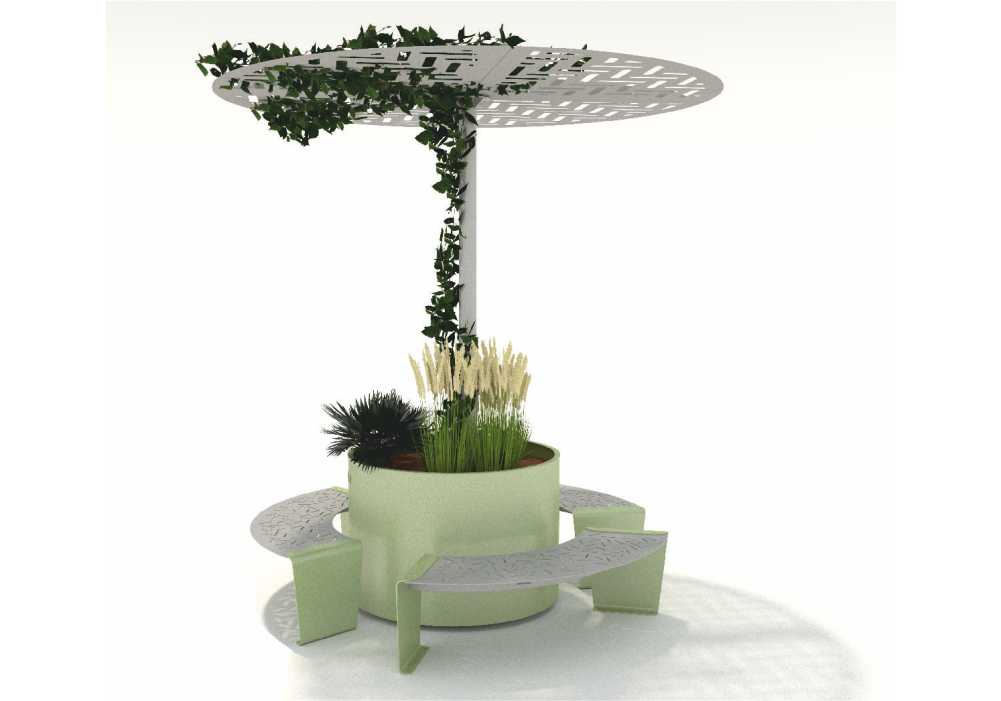
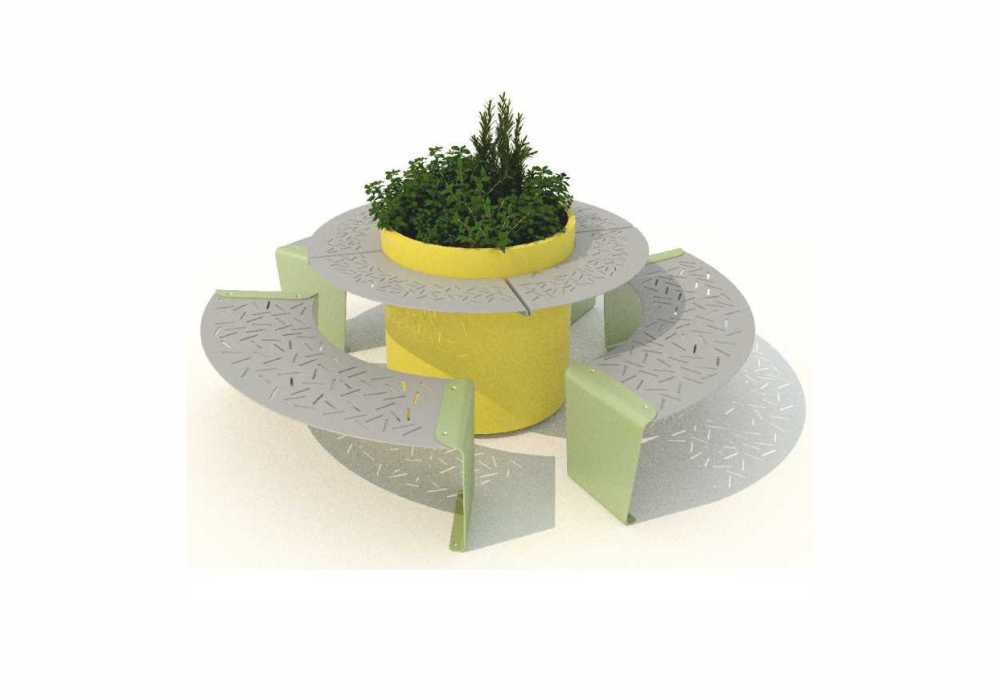
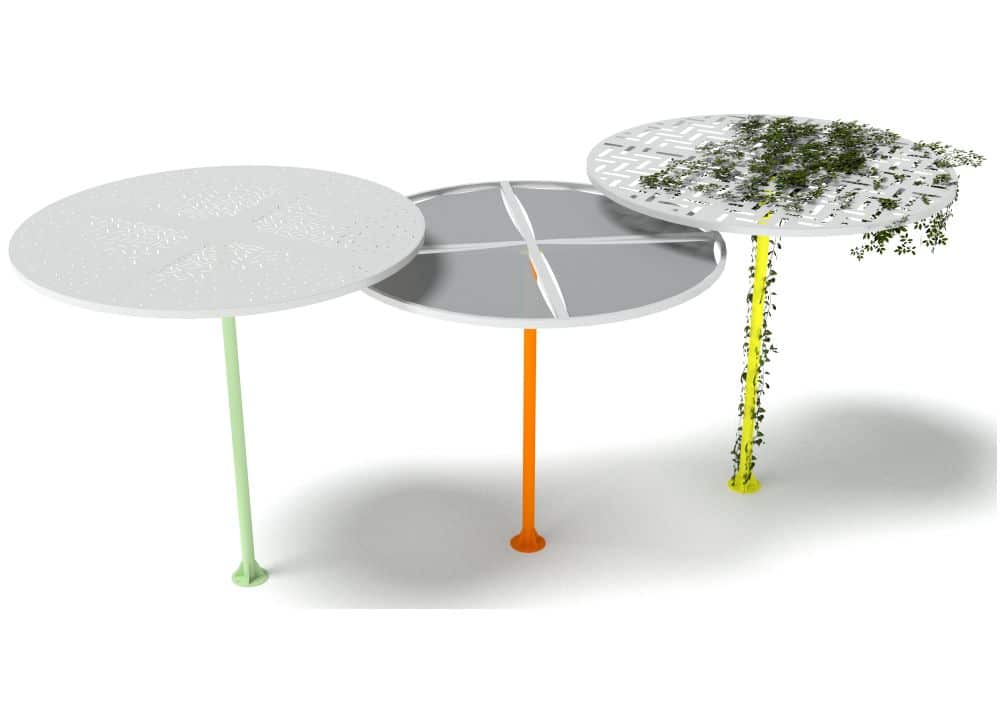
  • Planted street furniture, such as shades and planters, which combine design, comfort and the creation of shaded areas.
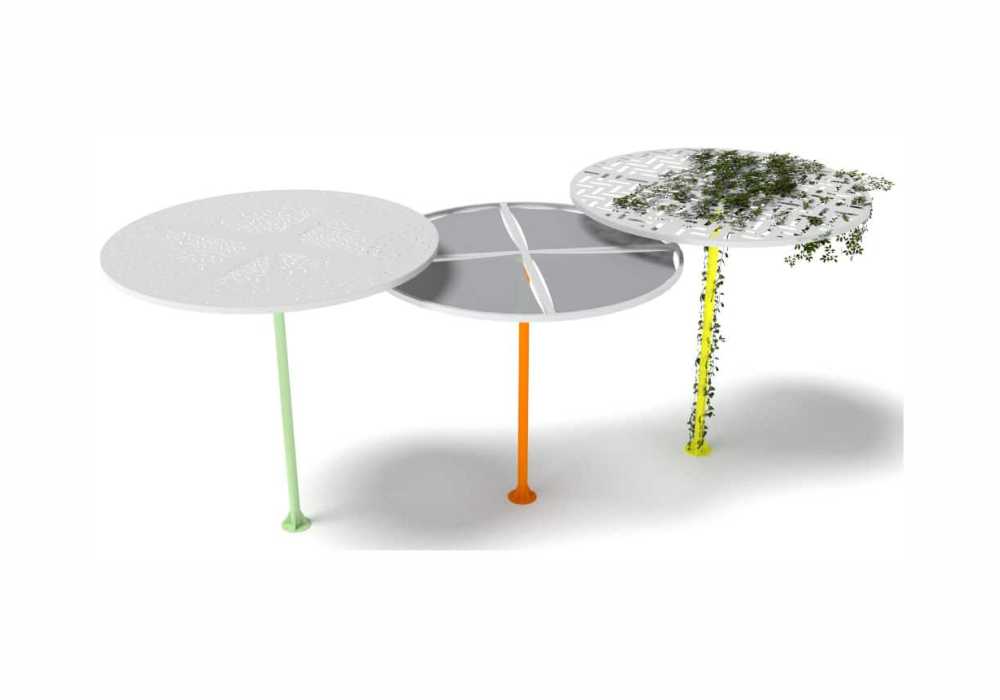
  • Ecological shade structures take things a step further, combining eco-design, revegetation and the creation of urban cool islands.
  • The (re)creation of permeable soils, areas of water and shade allows the city to “breathe”, reducing the ambient temperature and mitigating the effects of extreme heat.

What products does Polymobyl offer for creating cool islands?

To refresh public spaces, we’ve come up with innovative, sustainable solutions. Our products are designed with four objectives in mind: eco-responsibility, robustness, functionality and design.

The Polymobyl street furniture catalog includes several elements, all customizable and infinitely combinable to suit your spaces:

  • simple plant shading or with rainwater recovery system ;
  • planters and containers with or without trellis ;
  • simple or planted urban galleries and pergolas ;
  • customized shading solutions, especially for sites that can’t be planted (urban galleries, shaded areas, pergolas with or without trellis).

Our main strength lies in the customized design of your urban cool island project. From the space audit to the design of the elements, their customization to your image and their 100% French manufacture, our team creates a unique layout. The result: a truly shaded, welcoming space, perfectly integrated into its environment and respectful of the planet.

Scroll to Top