

Do you have a project in mind?
Actualités > Sustainable Urban Mobility: How Can We Change People’s Habits?
Sustainable Urban Mobility: How Can We Change People's Habits?
Road transportation was the leading source of greenhouse gas emissions in France in 2019. This figure raises questions when you consider that 72% of the French workforce was still commuting to work by car in 2010… The situation has changed little since then.
Given this reality, sustainable urban mobility is a key tool for decarbonizing travel. However, for this to work, simply painting bike lanes isn’t enough. Polymobyl explains how to rethink the entire travel chain to truly develop green modes of transportation.
What is sustainable mobility?
These terms refer to all modes of transportation that emit no—or very few—greenhouse gases—especially when compared to gasoline-powered passenger cars.
We distinguish between “zero-carbon” modes of transportation—such as walking and cycling without electric assistance—and low-carbon modes. Electric-assist bicycles (e-bikes), electric scooters, and public transportation fall into this category. Even when they consume energy, their carbon footprint per passenger remains much lower than that of a private car. Electric cargo bikes are becoming increasingly popular among advocates of sustainable mobility, particularly for urban deliveries and families.
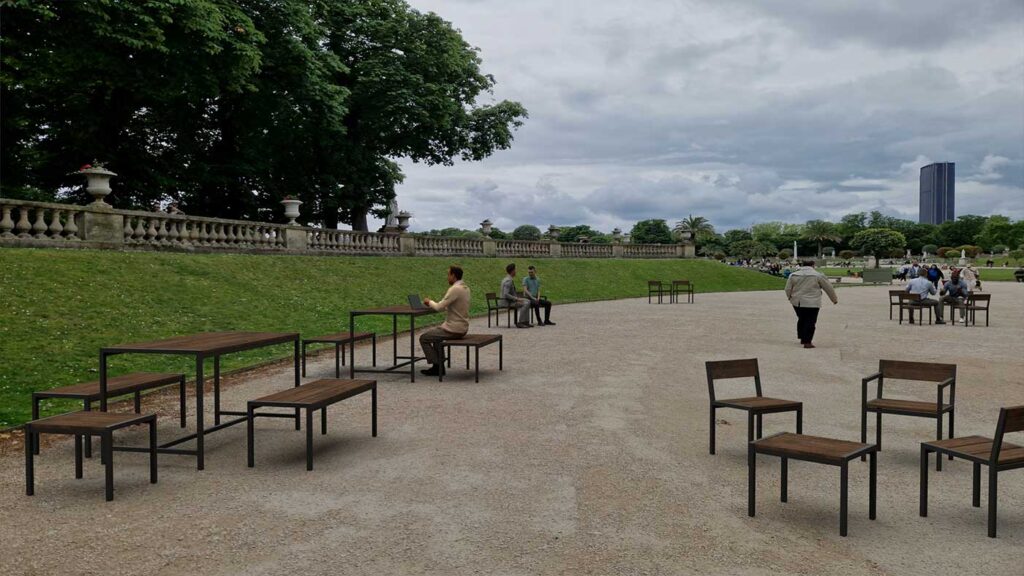

Why aren't bike lanes enough to promote sustainable transportation?
Creating dedicated bike lanes and pedestrian zones is a necessary step. However, sustainable urban mobility only truly works when the entire travel chain is planned from start to finish. In other words: from the garage at home to the parking spot at work, the train station, or public parking lots in the city center.
That’s where street furniture comes in, particularly bike shelters. A commuter who can’t find a place to park their bike when they arrive at the office will eventually end up taking their car again. A local government can invest millions in bike lanes, but if it doesn’t provide any parking solutions, much of that effort is wasted.
What does a well-designed bike shelter actually contribute to green mobility in the city?
A bike shelter in the city should offer more than just a canopy over a bike rack. This facility sends a threefold message to cyclists:
- Your bikes are welcome.
- They’re safe.
- You can park them properly and leave without worrying about your bike.
Bicycle shelters are therefore as much a functional facility as they are a tool for influencing behavior. They actively help encourage users to switch to sustainable modes of transportation in the city.
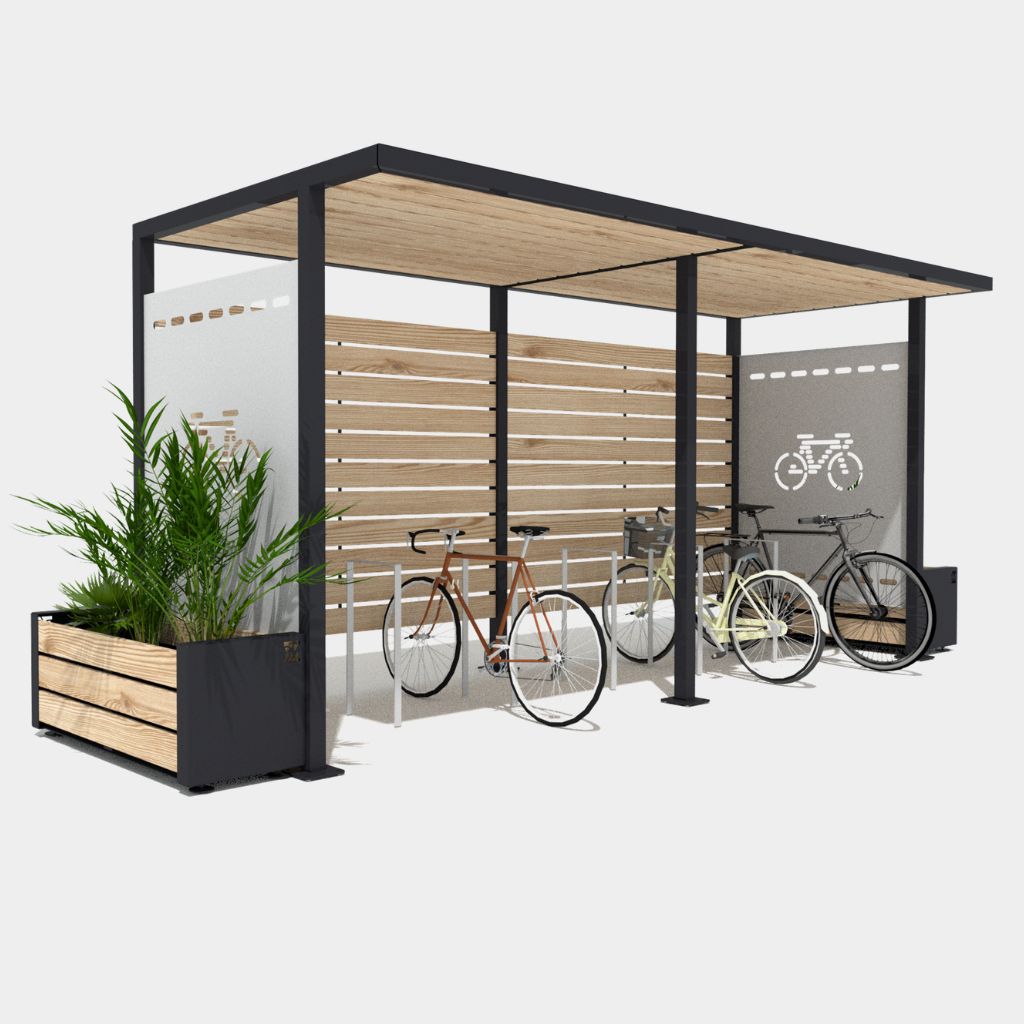
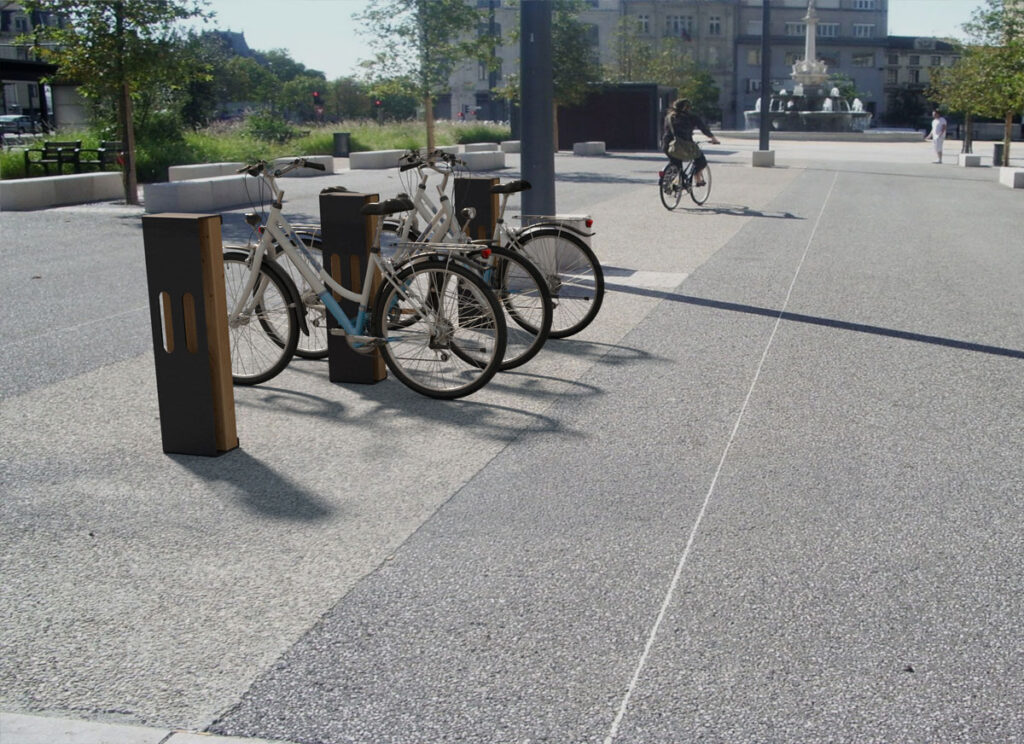
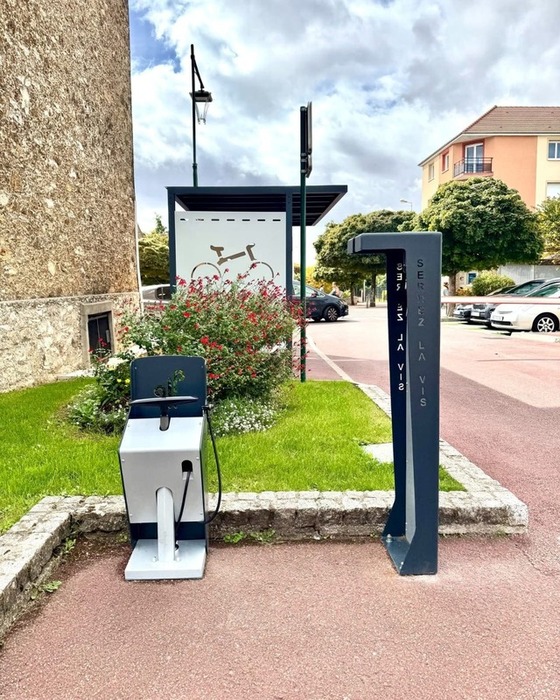
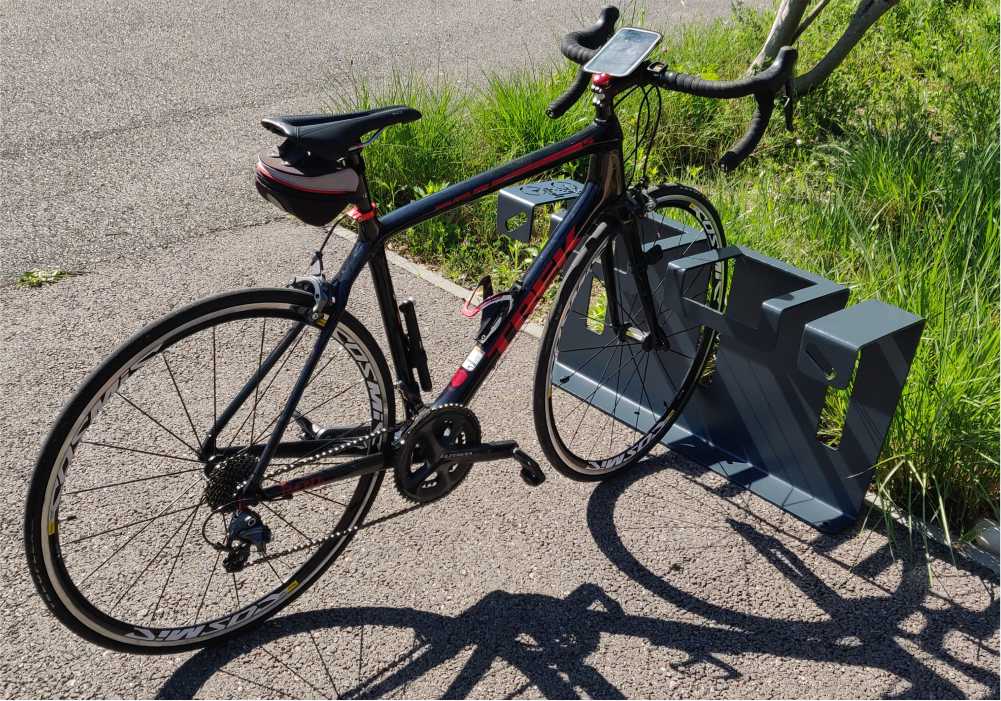
What accessories complement a bike shelter and make it truly effective?
A bike shed or awning alone is not enough. The entire bike parking area must make sustainable transportation attractive to city residents.
Bicycle racks and bike hoops
They are essential for organizing parking, both inside parking structures and outdoors. The PUR bike rack, a compact steel arch designed to be set in concrete or mounted on base plates, is a simple and sturdy basic solution. The CUB bike rack, with its wooden insert, offers a warmer, more inviting look. Both are compatible with all types of bicycles, including cargo bikes.
Multifunction Terminals
This equipment turns a simple shelter into a full-fledged bike service station:
- an air pump station, to inflate a tire before heading out again;
- a repair station, equipped with all the tools needed for routine maintenance;
- an e-bike charging station, for recharging batteries during the workday or while parked.
Parking Racks
These accessories help maximize storage density in a limited space. The Polymobyl line is available in three main models:
- rack for standard bicycles (up to three spaces);
- a model for cargo bikes;
- a scooter rack.
All Polymobyl equipment complies with the recommendations of the FUB, the French Federation of Bicycle Users. Sturdy and durable, they can be installed on any surface, either by concrete anchoring or mounting on a base plate. Knowing that you can park and charge your bike safely, without the risk of theft or damage, helps support sustainable urban mobility.
Do these facilities really encourage people to switch to a different mode of transportation?
The quality of the design sends a strong message to current and potential cyclists. A well-designed, well-equipped, and well-maintained parking area underscores the commitment to integrating cyclists and supporting their efforts.
Far from being mere accessories, bike shelters and the racks they contain encourage the use of sustainable transportation. In this way, they ideally complement public bike-sharing services or well-designed pedestrian zones. The impact on travel habits is built on these details.
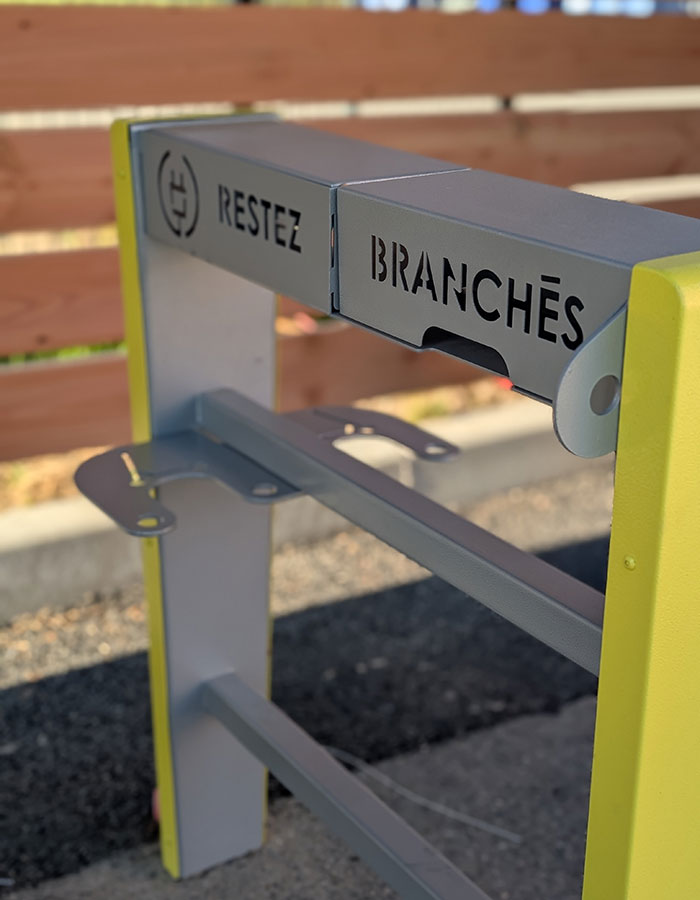


Why choose a custom-built shelter over a standard one?
Polymobyl has been assisting local governments and businesses in the design of this equipment for 40 years. Our approach goes far beyond a simple catalog and involves comprehensive, expert support.
Every urban planning project follows several steps:
- a site audit and analysis of its actual uses;
- custom design tailored to the desired capacity, required safety standards, and the aesthetics of the surroundings;
- design with 2D/3D plans and client approval;
- manufacturing and customization of the equipment;
- on-site installation (turnkey or delivery with assembly assistance).
Throughout the project, a single, readily available point of contact works closely with the client. This approach avoids the pitfalls of generic, poorly sized, or poorly integrated furniture, which discourages rather than encourages everyday cycling.
Sustainable urban mobility cannot be mandated—it must be built. Local governments and businesses that invest today in high-quality infrastructure are accelerating the transition to sustainable modes of transportation. They are helping to build more resilient and livable cities, where reducing carbon emissions is no longer a constraint but a collective commitment.
Would you like to promote green mobility in the city through a bike parking project?
Contact Polymobyl to get an audit and a customized, cost-estimated solution.
Contact Polymobyl to get an audit and a customized, cost-estimated solution.