


Discover our catalog

Urban Greening: Polymobyl Supports Local Governments in Addressing Their Planning Challenges

Our catalog

In a highly urbanized environment, heat waves can have dramatic consequences. In light of climate change, greening cities has therefore become a priority for local governments. Two strategies for urban greening are possible: planting trees—with the constraints that this entails—or installing green street furniture. Quick to implement, requiring no major construction work or large investments, this second option appeals to urban planners.

What role does urban greening play in adapting to climate change?

The urban heat island phenomenon results from two factors: global warming and the urban sprawl of cities, which lack sufficient green spaces. Today, urban planning projects in France face a variety of challenges.

Thermal Considerations

Mineral surfaces (building walls, asphalt, concrete, etc.) absorb heat during the day and release it at night, creating heat islands. Vegetation helps lower temperatures in these areas by:

  • shading, which reduces direct sunlight on surfaces;
  • evapotranspiration, which naturally cools the surrounding air.

Studies show that the perceived temperature is 3 to 5°C lower in the immediate vicinity of vegetation in urban areas.

Biodiversity and Quality of Life

The second benefit of urban greening lies in plants’ ability to filter fine particulate matter, which improves air quality. Vegetation also helps pollinating insects return.

According to a recent survey, 80% of French people believe there isn’t enough greenery in cities. Bringing nature back into urban spaces improves well-being, reduces stress, and makes cities more attractive.

Regulatory Compliance

The “zero net land-use change” (ZAN) goal and the Climate and Resilience Act require local governments to rethink their land-use policies. Greening existing public spaces is one of the most effective ways to address this challenge. Furthermore, installing green street furniture requires neither changes to land use nor the sealing of new soil surfaces.

How can you add greenery to public spaces with Polymobyl?

Creating urban green spaces requires the right outdoor furniture.
Polymobyl designs a complete line of products dedicated to greening public and commercial spaces.

Self-supporting green pergola CUB

This urban pergola features a steel frame, a stainless steel trellis, and a Douglas fir base. The planter box allows for the installation of climbing plants that gradually cover the trellis. The structure can be entirely covered with plants, from the roof to the side panels. The pergola is freestanding, requires no ground anchors, and can be set up quickly without any construction work.

The CUB green pergola offers three immediate benefits:

  • provides shade immediately upon installation;
  • increasing freshness over time;
  • creation of a green space in a public area.

Quick to implement, this comprehensive solution can be used to design a variety of spaces: squares, courtyards, plazas, third places, public gardens, and more…

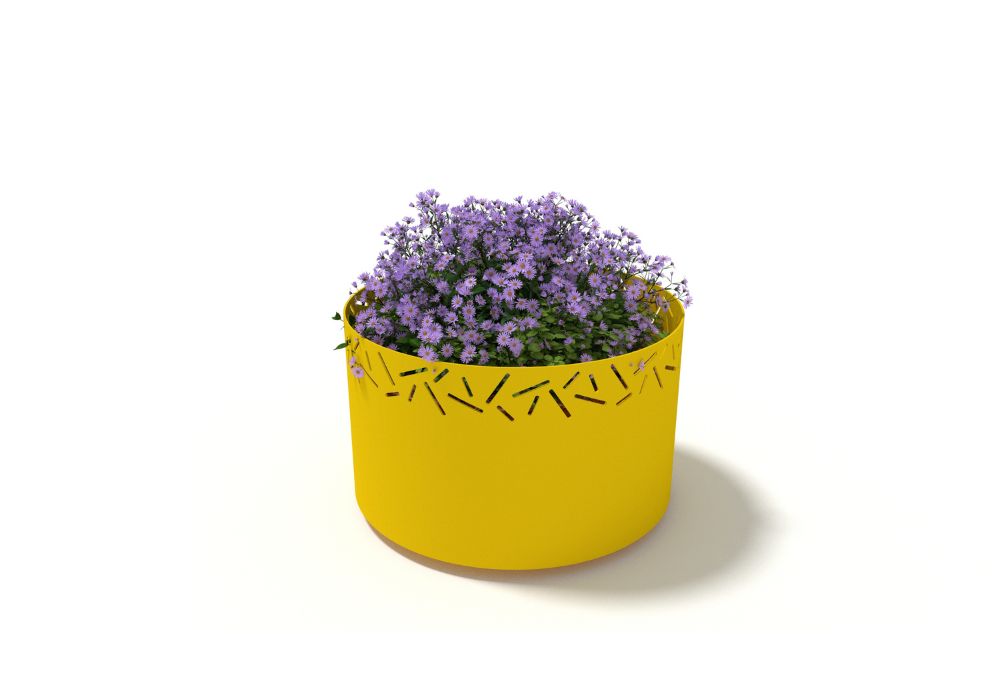
Trellis planter LUD

This planter features a trellis system that provides support for climbing plants. Made of sheet steel, it is then powder-coated in a choice of eight colors (other RAL colors available upon request).

With its modern and colorful design, this planter fits right in with contemporary public spaces.

The main advantage of the LUD planter is that it allows you to grow plants without planting them directly in the ground, for example:

  • in a parking lot or in a building’s courtyard;
  • to create a “green wall” effect or hide an unsightly feature;
  • to mark off an area or the entrance to a pedestrian path…

LUD Rainwater-Harvesting Plant-Covered Umbrella

This structure combines a planter with a cone-shaped fabric that collects rainwater and naturally channels it to the plants. It creates a shaded, cool area while making effective use of rainwater. The LUD canopy, made of powder-coated steel, can be painted in any RAL color and complemented with matching curved benches.

This green canopy is particularly well-suited for areas with high foot traffic in the summer, such as markets, esplanades, and seaside promenades. It is equally well-suited for greening projects in schoolyards.

CUB planter

This line is available in several styles (square or rectangular bases) and sizes (460, 1030, and 1400 mm). As a result, the line can be adapted to any type of landscape design. The planters are made of steel but can be finished with a wood cladding.

The large capacity of the XL planters (up to 800 liters) makes it possible to grow large plants and even small trees. This urban planter thus becomes a true element of landscape design in a public square.

NUT planter

This line of green public furniture is made of wood, giving it a natural and warm look. It includes planters holding up to 300 liters that combine a steel frame with a Douglas fir exterior.

These designs blend seamlessly into historic or natural settings. They allow for the harmonious integration of vegetation into a wide variety of locations, particularly for:

  • designate pedestrian areas (sidewalks, small plazas, etc.);
  • enhance the safety and privacy of public spaces (café terraces, schools, etc.);
  • provide shade near bus stops…

Combining these different solutions makes it possible to create resilient designs that can cool urban spaces and improve residents’ quality of life. In addition to its effectiveness in addressing climate change, urban greening integrated into street furniture adds cohesion and appeal to the city. From site assessment to installation, Polymobyl supports your projects throughout France.

Scroll to Top